Written by Jamie Glass, [LCSW, CSAT, CPTT, EMDR] — [Specialties in Trauma and PTSD, Codependency, Mood Disorders, and EMDR]. Read their full bio.
Updated: [06/17/26]
Yes, watching too much news can affect your mental health. While staying informed is important, constant exposure to distressing headlines can keep your nervous system in a state of heightened alertness. Many people find themselves feeling anxious, overwhelmed, hopeless, or emotionally exhausted—not because of a direct threat in their immediate environment, but because they are continually consuming information that signals danger, uncertainty, and crisis.
Key Takeaways
- Constant exposure to negative news can increase anxiety, stress, and feelings of helplessness.
- The brain is wired to pay attention to potential threats, making it easy to get stuck in a cycle of repeatedly checking headlines.
- Staying informed is healthy. Feeling consumed by the news is different.
- Therapy can help you process difficult emotions, establish healthier boundaries with media, and regain a sense of control.
Table of Contents
- Why Do Negative Headlines Feel So Hard to Ignore?
- When Staying Informed Starts Feeling Like a Full-Time Job
- What Constant News Exposure Does to Your Nervous System
- The Difference Between Being Informed and Being Consumed
- Why More Information Doesn’t Always Create More Peace of Mind
- How Therapy Helps Break the Negative Headline Loop
- Signs It May Be Time to Talk to Someone
- Frequently Asked Questions
Why Do Negative Headlines Feel So Hard to Ignore?
Human brains evolved to pay attention to potential threats.
Thousands of years ago, that tendency helped people survive. Today, it means our attention is naturally pulled toward stories about conflict, disasters, economic uncertainty, violence, and crisis.
News organizations understand this reality. Headlines are often designed to capture attention quickly, particularly when they trigger strong emotional reactions.
The result is a cycle where many people find themselves checking updates throughout the day, hoping to feel more informed, while simultaneously feeling more distressed.
When Staying Informed Starts Feeling Like a Full-Time Job
Many of the professionals we work with at Glass Psychotherapy are thoughtful, intelligent people who genuinely care about what’s happening in the world.
They aren’t spending hours reading headlines because they’re irresponsible with their time. Often, the opposite is true.
They’re trying to be informed citizens. They’re trying to prepare. They’re trying to stay ahead of potential problems.
But at some point, the habit shifts.
Instead of checking the news for information, they begin checking the news for reassurance.
And reassurance is rarely what the news is designed to provide.
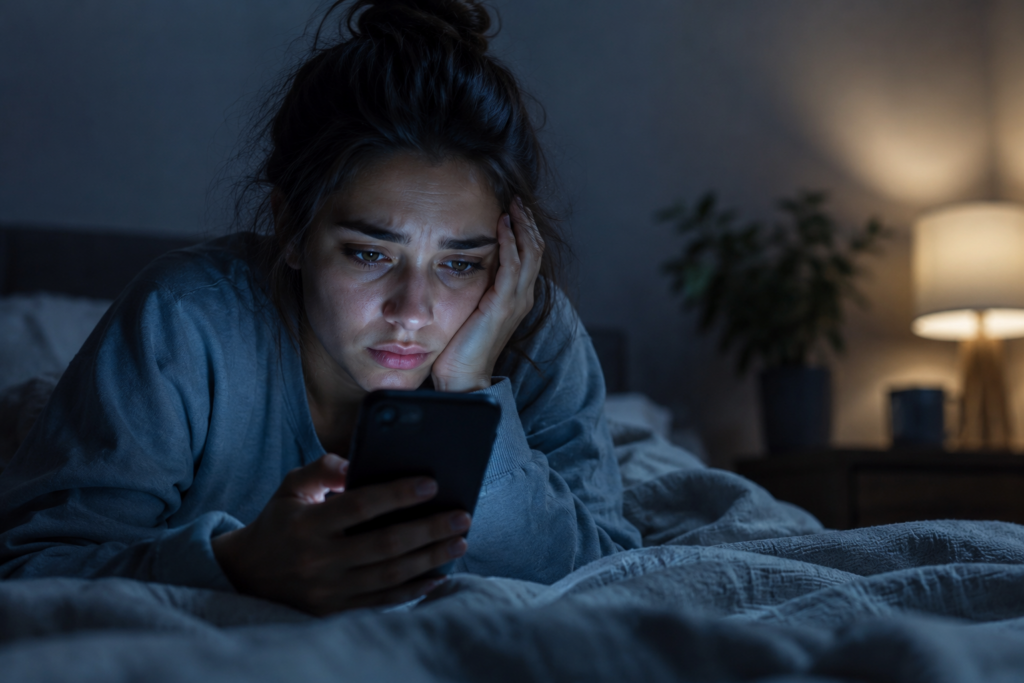
That’s when people often notice they can’t stop refreshing their feeds, even though they feel worse afterward.
What Constant News Exposure Does to Your Nervous System
Repeated exposure to distressing information can create a state of ongoing vigilance.
Even when you are physically safe, your nervous system may continue responding as though danger is nearby.
You might notice:
- Difficulty relaxing
- Increased anxiety
- Trouble falling asleep
- Feeling emotionally drained
- Irritability
- Difficulty concentrating
- A sense that something bad is about to happen
For individuals with a history of anxiety or trauma, the effect can be even stronger.
The nervous system doesn’t always distinguish between a threat happening directly to you and a threat you are repeatedly witnessing through screens.
The Difference Between Being Informed and Being Consumed
Being informed helps you understand what’s happening in the world.
Being consumed by the news makes it difficult to fully participate in your own life.
One creates awareness.
The other creates constant activation.
A simple question we often encourage clients to ask themselves is:
“After I read the news, do I feel informed—or do I feel overwhelmed?”
The answer can tell you a lot about whether your relationship with news consumption is serving you.
Why More Information Doesn’t Always Create More Peace of Mind
Many people believe that if they read enough articles, listen to enough podcasts, or follow enough updates, they will eventually feel more prepared.
Unfortunately, anxiety doesn’t usually work that way.
Anxiety tends to convince people that the next piece of information will finally make them feel certain.
Then another headline appears.
And another.
And another.
The search for certainty becomes endless. Uncertainty is part of being human. No amount of news consumption can eliminate it. Learning how to tolerate uncertainty is often far more effective than trying to out-research it.
How Therapy Helps Break the Negative Headline Loop
Therapy offers something the news cannot: space to process.
News delivers information. Therapy helps people understand their reactions to that information.
For some people, constant news consumption is connected to anxiety. For others, it reflects deeper fears about safety, control, vulnerability, or the future.
Rather than simply encouraging people to stop watching the news, therapy explores what keeps them returning to it.
That distinction is important.
When people understand what emotional need the behavior is serving, they can begin responding to that need in healthier ways.
Many clients discover that reducing their emotional reactivity isn’t about becoming less informed. It’s about becoming more grounded.
Signs It May Be Time to Talk to Someone
News consumption may be affecting your mental health if:
- You feel anxious most days after checking the news
- You have difficulty disconnecting from current events
- Your sleep has worsened
- You find yourself compulsively checking updates
- You feel increasingly hopeless about the future
- News stories stay with you long after you’ve finished reading them
- Friends or family have commented on how often you’re talking about current events
You don’t need to be experiencing a mental health crisis to benefit from therapy.
Sometimes the goal is simply to create more balance between being aware of what’s happening in the world and being fully present in your own life.
Frequently Asked Questions
Can watching the news cause anxiety?
Watching the news does not directly cause anxiety disorders, but excessive exposure to distressing news can increase anxiety symptoms, stress, and emotional overwhelm, particularly for individuals who are already prone to anxiety.
What is doomscrolling?
Doomscrolling refers to the habit of continuously consuming negative news or social media content, often long after it stops feeling productive or helpful.
Why can't I stop checking the news?
Many people check the news repeatedly because they are seeking certainty, reassurance, or a sense of control during uncertain times. Unfortunately, the habit often increases anxiety rather than reducing it.
Can therapy help with anxiety about current events?
Yes. Therapy can help people understand their emotional reactions to current events, manage anxiety more effectively, and develop healthier boundaries around news consumption.
How much news is too much for mental health?
There is no universal number of minutes or hours. A useful measure is how you feel afterward. If news consumption consistently leaves you feeling distressed, overwhelmed, or unable to disengage, it may be worth reassessing your habits.
About Glass Psychotherapy
Glass Psychotherapy is a boutique psychotherapy practice serving adults throughout New York City. Our therapists work with professionals navigating anxiety, burnout, trauma, relationship challenges, and major life transitions. Through personalized, evidence-based therapy, we help clients better understand themselves and build healthier ways of responding to stress, uncertainty, and change.