
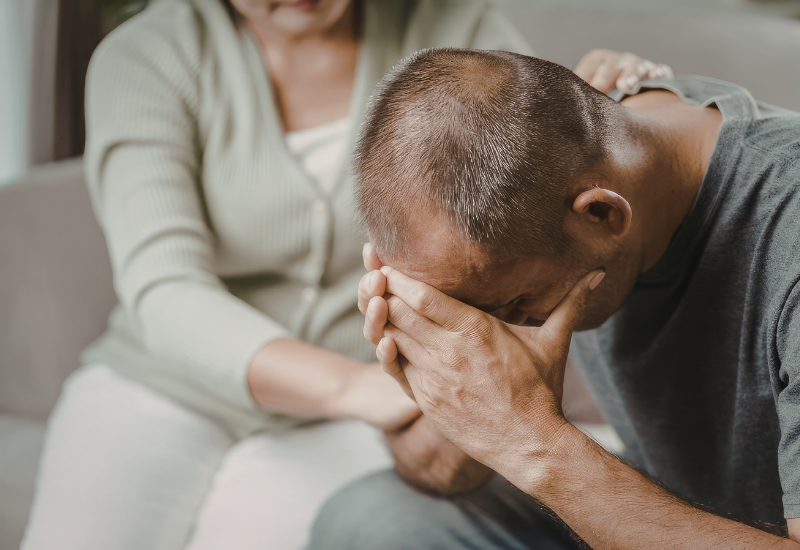
In many relationships, one partner quietly takes on the role of emotional stabilizer. They stay calm when things feel uncertain, regulate conflict before it escalates, and hold space for their partner’s feelings even when their own are ignored. This role is often praised. Being steady, grounded, and emotionally capable is seen as a strength, yet this dynamic can gradually contribute to emotional burnout in relationships.
Over time, however, that strength can turn into exhaustion.
Always being the “strong one” can lead to emotional burnout in relationships, particularly when strength becomes synonymous with emotional suppression, constant caretaking, or unshared responsibility. The relationship may continue functioning, but the person holding it together often feels increasingly depleted.
At Glass Psychotherapy, we frequently work with individuals who care deeply about their relationships yet feel worn down by the unspoken expectation that they must be the emotionally resilient one at all times. Understanding how this pattern forms and why it persists is essential for restoring balance and preventing long-term burnout.
How the “Strong One” Role Takes Shape
This role rarely begins as a conscious decision. It develops gradually, often shaped by early life experiences and reinforced within adult relationships. Many people who become the strong one learned early that emotional steadiness was necessary to maintain connection. Others were praised for being mature, adaptable, or reliable and learned to associate those traits with worth and belonging.
In romantic relationships, this pattern is often reinforced when one partner struggles with emotional regulation, avoidance, or inconsistency. The more one person compensates, the more the dynamic solidifies. Strength becomes less about resilience and more about obligation.
At first, the role may feel purposeful. There is meaning in being supportive and present. The problem arises when there is little space for reciprocity, and strength becomes a one-way expectation rather than a shared capacity.
What Being the “Strong One” Looks Like Day to Day
In practice, emotional strength often shows up quietly. It is not dramatic or overt. It is embedded in everyday interactions and unspoken adjustments.
You may notice yourself consistently initiating difficult conversations, managing emotional tone, or smoothing over conflict before it becomes visible. You might reassure your partner while privately holding uncertainty, disappointment, or fatigue. Over time, you may stop expressing certain needs altogether because doing so feels destabilizing.
These behaviors are often interpreted as emotional intelligence or maturity. Emotional burnout in relationships develops when this level of emotional labor becomes the norm rather than the exception.
When Support Turns Into Emotional Overfunctioning
Healthy relationships involve moments of imbalance. At times, one partner may need more support while the other carries more emotional weight. Emotional burnout emerges when this imbalance becomes chronic.
In these dynamics, one person becomes responsible not only for their own emotions, but also for managing the emotional climate of the relationship. They anticipate reactions, regulate conflict, and take responsibility for repair. The relationship continues, but it does so at the expense of one person’s emotional energy.
Over time, the strong one may begin to feel less like a partner and more like a stabilizing system. This shift is subtle, and it often goes unnoticed until exhaustion or resentment begins to surface.
Emotional Burnout Is Often Misinterpreted
Many people experiencing emotional burnout in relationships do not initially recognize it as burnout. Because they are still functioning and still committed, they may assume the issue lies within them rather than within the relational dynamic.
Emotional burnout often reveals itself gradually. You may feel emotionally tired even after rest, less connected to your partner, or increasingly irritable. You may notice a growing sense of detachment or a loss of enthusiasm for emotional intimacy. These experiences are often followed by guilt for feeling them at all.
Rather than signaling failure, these responses often reflect a nervous system that has been operating in a heightened state for too long.
Why the Strong One Struggles to Speak Up
People who take on the strong role often have difficulty expressing their own needs. This is rarely about a lack of awareness. More often, it stems from an internalized belief that stability depends on containment.
There may be a fear that expressing exhaustion or frustration will disrupt the relationship or overwhelm the other person. There may be a long-standing habit of minimizing personal needs or postponing them indefinitely. Over time, receiving support may feel unfamiliar or even uncomfortable.
These patterns keep emotional burnout in relationships quietly entrenched, particularly when the relationship relies on one person’s steadiness to function.
How Emotional Burnout Affects Connection and Intimacy
Emotional burnout does not remain isolated within the individual. It reshapes the relationship itself.
When one partner is consistently overextended, vulnerability begins to feel risky rather than connecting. Emotional intimacy can feel draining rather than nourishing. Desire for closeness may decrease, not because of a lack of care, but because of emotional fatigue.
The strong one may begin to withdraw emotionally as a form of self-protection. This withdrawal is often misunderstood as disinterest or detachment, when it is actually a response to sustained emotional overextension.
Resentment as Information
Resentment is one of the most common experiences associated with emotional burnout in relationships. It is also one of the most stigmatized. Many people feel ashamed of resentment, especially if they value loyalty and commitment.
Resentment often signals that needs have gone unmet for an extended period of time. It reflects a gap between what is being given and what is being received. When resentment is ignored or suppressed, it tends to surface indirectly through irritability, emotional distance, or disengagement.
Rather than viewing resentment as a flaw, it can be understood as information about where balance has been lost.
Attachment Patterns and Emotional Burnout
Emotional burnout is often rooted in attachment patterns formed early in life. Individuals who experienced emotional neglect, inconsistent caregiving, or early responsibility often learn that connection requires effort, vigilance, or self-sacrifice.
These patterns can reappear in adult relationships, particularly during stress or conflict. Without awareness, the same strategies that once ensured closeness begin to create emotional exhaustion.
Trauma-informed therapy helps differentiate between past attachment strategies and present-day relational needs. This awareness is key to shifting the pattern rather than repeating it.
Why the Dynamic Persists
Relationships marked by emotional burnout often continue because they appear stable. One person compensates for imbalance, and the relationship remains intact.
The cost, however, is internal. Over time, emotional exhaustion can lead to disengagement, loss of trust, or a sense of resignation. Without intentional change, the pattern becomes increasingly difficult to disrupt.
Change often feels uncomfortable at first. Shifting roles challenges long-standing expectations and can temporarily increase tension. This discomfort is often what prevents the pattern from changing on its own.
What Healing Involves
Addressing emotional burnout in relationships does not require abandoning care or commitment. It requires redefining strength.
Healing often involves learning to express needs without managing outcomes, allowing discomfort without immediately stabilizing it, and creating space for mutual responsibility. It may include tolerating vulnerability without taking on the emotional work for both people.
Therapy provides a structured environment to explore these shifts thoughtfully and intentionally.
Therapy and Emotional Burnout in Relationships
In therapy, individuals often begin to understand why their exhaustion makes sense given the role they have been playing. Therapy focuses on understanding the function of the pattern rather than assigning blame.
Work may include:
- identifying where emotional labor has become one-sided
- exploring beliefs about responsibility and care
- practicing boundary-setting and emotional expression
- assessing whether the relationship can adapt to healthier dynamics
For some, therapy supports renegotiating the relationship. For others, it clarifies whether the relationship is capable of meeting their emotional needs.
Rethinking Strength
Strength does not require constant endurance. In healthy relationships, strength includes flexibility, honesty, and shared emotional responsibility.
Emotional burnout in relationships often resolves when strength is no longer measured by how much one person can carry, but by how much can be held together.
If you’re searching for help:
If this article reflects your experience, it may be helpful to explore these dynamics with professional support. Emotional burnout develops gradually and often requires intentional reflection to untangle.
At Glass Psychotherapy, our clinicians work with individuals and couples navigating emotional exhaustion, attachment patterns, trauma, and relational imbalance. Our trauma-informed, attachment-focused approach supports insight and sustainable change.
If you are interested in exploring emotional burnout in relationships, you can schedule a therapy session to begin that process.